
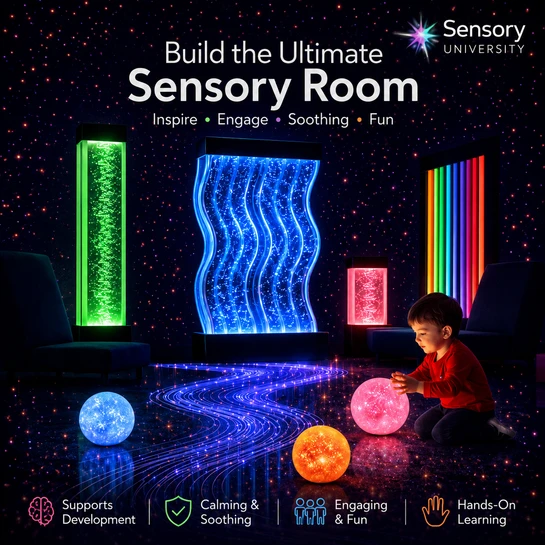
A sensory room doesn't have to be complicated—or filled with equipment—to make a meaningful difference. The best sensory spaces are designed around one simple idea: give children a safe place to get the sensory input their bodies need.
For some children, that means calming down after an overwhelming day. For others, it means movement, visual stimulation, tactile exploration, or a place where they can focus and regulate before returning to their daily activities.
Whether you're creating a sensory room at home, in a classroom, or in a therapy setting, here are some of the most important elements to consider.
What Is a Sensory Room?
A sensory room is a dedicated space containing equipment and activities that provide different types of sensory experiences.
Depending on how the room is designed, it may include:
-
Visual stimulation
-
Tactile experiences
-
Movement and balance activities
-
Deep-pressure input
-
Calming spaces
-
Interactive cause-and-effect activities
-
Fine and gross motor activities
There isn't one "perfect" sensory room. What works for one child may be completely different from what works for another.
That's why we recommend building a sensory environment around needs rather than simply filling a room with products.
1. Start With a Calming Area
Every sensory room should have somewhere a child can retreat when they need less stimulation.
Soft seating, crash pads, beanbags, mats, weighted products, and other comfortable equipment can help create a defined calming area.
Lighting matters too.
Bright overhead lighting can sometimes be overwhelming. Softer lighting, bubble tubes, fiber optics, projectors, or other controlled visual effects can completely change the atmosphere of a room.
The goal is to create an environment that feels inviting rather than demanding.
2. Add Visual Sensory Experiences
Visual equipment is often what makes a sensory room immediately recognizable.
Bubble tubes, illuminated panels, projectors, fiber-optic products, mirrors, and color-changing lights can create fascinating visual experiences while also providing opportunities for interaction and cause-and-effect learning.
But more isn't always better.
A room filled with multiple flashing or moving lights can become overstimulating. Consider using visual products individually or allowing the child to control which effects are active.
A sensory room should be adaptable.
Sometimes the goal is stimulation. Other times, it's reducing stimulation.
3. Don't Forget Movement
A beautiful sensory room isn't very useful if everything in it is designed to be watched.
Children need opportunities to move.
Depending on the space available, movement equipment might include swings, balance products, stepping stones, therapy balls, rockers, tunnels, or other gross-motor activities.
Movement can provide vestibular and proprioceptive input while encouraging balance, coordination, motor planning, and body awareness.
Even a small sensory area can incorporate movement.
You don't need a gym-sized room to create meaningful sensory experiences.
4. Include Hands-On Tactile Activities
Touch is another important part of sensory exploration.
Tactile products can expose children to different textures, shapes, pressures, and sensations through their hands and fingers.
Consider incorporating sensory balls, textured surfaces, fidgets, manipulatives, tactile panels, putty, or other hands-on activities.
These products can also be particularly useful when you don't have enough space for large sensory equipment.
A small tabletop sensory station can provide a surprising amount of sensory input.
5. Create Opportunities for Deep Pressure and Proprioceptive Input
Some children actively seek pushing, pulling, squeezing, crashing, or resistance.
These activities provide proprioceptive input—sensory information coming from muscles and joints that helps the body understand where it is in space.
Depending on the child's needs and professional recommendations, sensory spaces may incorporate activities such as pushing, pulling, carrying, climbing, jumping, or using appropriate weighted and compression products.
This is another reason sensory rooms shouldn't be designed as purely visual environments.
Sensory means more than lights.
6. Let the Child Have Some Control
One of the most valuable features you can build into a sensory room is choice.
When possible, allow children to choose between activities, lighting effects, textures, or equipment.
Interactive sensory equipment can be especially engaging because the child learns that an action creates a response:
Press something. A light changes.
Move something. A sound occurs.
Touch something. The environment reacts.
That combination of sensory exploration and cause-and-effect learning can make the space much more engaging.
7. You Don't Have to Build Everything at Once
This may be the most important advice for families creating a sensory space at home:
Start small.
You don't need to purchase an entire sensory room at once.
Begin with a few products that address the child's primary sensory needs. Watch how they're used. Learn what the child seeks out—and what gets ignored.
Then build from there.
A corner of a bedroom, playroom, basement, classroom, or therapy space can become an effective sensory area.
The quality of the experience matters much more than the size of the room.
Sensory Rooms Should Be Individual
Sensory processing is highly individual.
One child may find movement calming while another finds the same movement exciting. A particular light effect may fascinate one child and overwhelm another.
That means sensory equipment should never be viewed as a universal solution.
Parents, teachers, and caregivers should observe how a child responds, and an occupational therapist or other qualified professional can help identify appropriate sensory strategies when individualized guidance is needed.
Build a Space They Want to Use
Ultimately, the best sensory room isn't necessarily the most expensive or impressive one.
It's the room a child actually wants to use.
Create a space that encourages exploration. Give them opportunities to move, touch, watch, interact, and relax. Make the environment flexible enough to become stimulating when they need activity and calming when they need quiet.
At Sensory University®, we've spent years developing and sourcing sensory products for homes, schools, therapy clinics, and other sensory environments.
Whether you're starting with one corner or designing an entire sensory room, the goal remains the same:
Inspire. Engage. Explore. Regulate.
And build a sensory space around the child—not the other way around.