
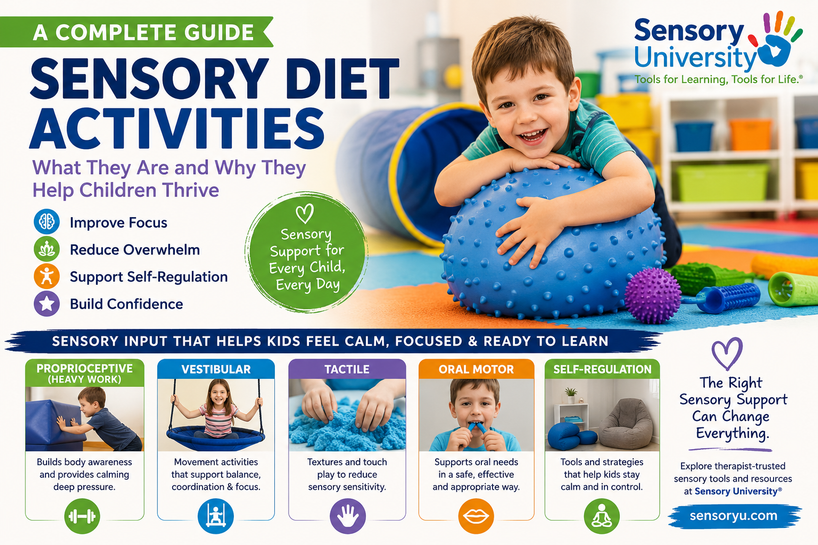
If you've ever heard an occupational therapist mention a sensory diet, you may have wondered if it has anything to do with food. It doesn't.
A sensory diet is a personalized collection of activities designed to give a child the sensory input their body needs throughout the day. For children with autism, ADHD, sensory processing disorder (SPD), anxiety, developmental delays, or other sensory differences, the right sensory activities can improve focus, reduce meltdowns, increase body awareness, and make everyday tasks easier.
At Sensory University®, we've spent years helping therapists, schools, and families find high-quality sensory products that support successful sensory diets.
What Is a Sensory Diet?
A sensory diet is a planned schedule of sensory activities that helps regulate the nervous system. Rather than waiting until a child becomes overwhelmed, sensory diets provide the right type of sensory input before problems occur.
Every child is different.
Some children constantly seek movement, while others avoid certain sounds, textures, or touch. A well-designed sensory diet helps meet those individual sensory needs throughout the day.
Occupational therapists often recommend sensory diets because they can help children:
- Improve attention and concentration
- Stay calmer during transitions
- Reduce sensory overload
- Develop better self-regulation
- Improve classroom participation
- Increase body awareness
- Build confidence and independence
Signs Your Child May Benefit From a Sensory Diet
Every child processes sensory information differently, but common signs include:
- Constant fidgeting
- Chewing on clothing, pencils, or fingers
- Difficulty sitting still
- Frequent meltdowns
- Walking on toes
- Crashing into furniture or people
- Avoiding certain clothing textures
- Covering ears around normal sounds
- Seeking constant movement
- Difficulty focusing at school
These behaviors aren't "bad behavior." They're often a child's way of meeting an unmet sensory need.
Types of Sensory Input
A balanced sensory diet usually includes activities from several sensory systems.
Proprioceptive Activities (Heavy Work)
Heavy work gives deep pressure to muscles and joints and is one of the most calming forms of sensory input.
Examples include:
- Carrying books
- Pulling resistance bands
- Therapy putty exercises
- Wheelbarrow walks
- Push-ups against the wall
- Weighted products (when recommended)
- Climbing activities
Heavy work is often the first strategy occupational therapists recommend because it helps organize the nervous system.
Vestibular Activities
Vestibular input comes from movement.
Examples include:
- Swinging
- Rocking
- Balance boards
- Scooter boards
- Jumping
- Spinning (when appropriate)
- Obstacle courses
Movement can help some children focus while helping others release excess energy.
Tactile Activities
Tactile input comes through touch.
Children may benefit from:
- Sensory bins
- Textured fidgets
- Therapy brushes (when professionally recommended)
- Water play
- Sand activities
- Play dough
- Tactile sensory toys
Tactile play also supports fine motor development.
Oral Motor Activities
Many children naturally chew because it provides calming sensory input.
Safe oral motor tools are a much better choice than chewing:
- Shirt collars
- Sleeves
- Pencils
- Toys
- Fingers
Professionally designed chew tools provide safer, more durable alternatives while supporting oral sensory needs.
Sensory Diet Activities at Home
Parents can easily build sensory breaks into everyday routines.
Try:
- Animal walks
- Jumping jacks
- Indoor obstacle courses
- Stretching
- Bubble blowing
- Yoga
- Building with blocks
- Therapy putty
- Fidget breaks
- Chew tools during homework
- Calm-down corners
Small sensory breaks throughout the day often work better than waiting until a child becomes overwhelmed.
Sensory Diet Strategies in the Classroom
Teachers can also incorporate sensory supports without disrupting learning.
Helpful classroom ideas include:
- Flexible seating
- Quiet fidgets
- Wiggle cushions
- Movement breaks
- Heavy work classroom jobs
- Standing workstations
- Calm corners
- Visual schedules
- Weighted lap pads (when appropriate)
Many schools now recognize that movement can actually improve attention rather than distract from learning.
How Occupational Therapists Create Sensory Diets
A sensory diet should always match a child's unique needs.
An occupational therapist evaluates:
- Sensory seeking behaviors
- Sensory avoidance
- Fine motor skills
- Gross motor development
- Attention
- Daily routines
- School performance
- Home challenges
The result is a customized plan rather than a one-size-fits-all approach.
Choosing the Right Sensory Products
Not every sensory toy provides meaningful sensory input.
Look for products that:
- Are durable and safe
- Match your child's sensory needs
- Encourage regulation instead of distraction
- Can be used at home, school, or therapy
- Are recommended by therapists and educators
High-quality sensory products become tools—not just toys.
Why Families and Therapists Trust Sensory University®
For years, Sensory University® has supplied occupational therapists, educators, schools, clinics, and families with trusted sensory products designed to support children of all abilities.
Whether you're looking for:
- Oral motor tools
- Fidget toys
- Fine motor activities
- Gross motor equipment
- Weighted calming products
- Sensory room equipment
- Classroom sensory tools
- Therapy resources
our goal is to provide products that truly make a difference in children's lives.
Final Thoughts
A sensory diet isn't about changing who a child is—it's about giving them the sensory input they need to feel comfortable, focused, and successful.
When children receive the right sensory support, they're often better able to learn, communicate, participate, and enjoy everyday activities.
If you're looking for therapist-trusted sensory products to support your child's sensory journey, explore the complete collection at Sensory University®, where families and professionals have trusted us for years.