
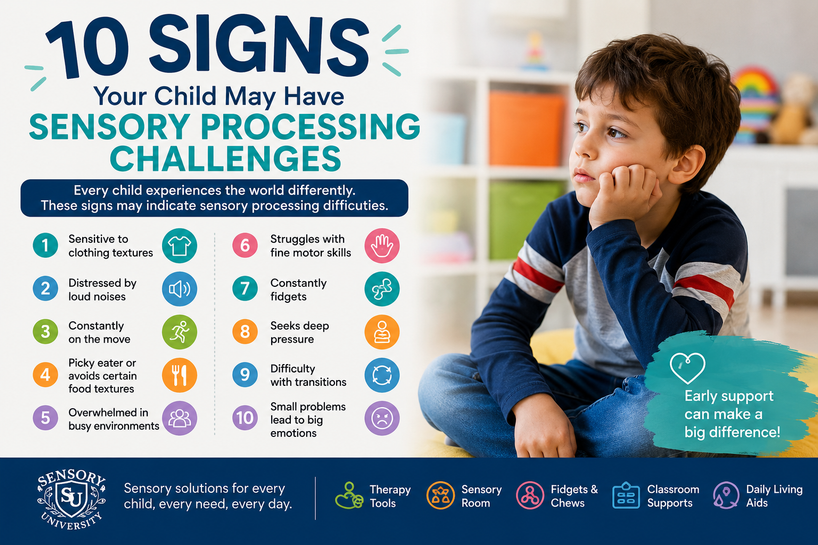
Every child experiences the world differently. Some love movement, while others become overwhelmed by loud sounds, bright lights, or certain clothing. Children process information from their senses every second of the day, and for some, that process can be more challenging.
Sensory processing challenges can affect children with autism, ADHD, developmental delays, and many other conditions, but they can also occur independently. Recognizing the signs early allows parents, teachers, and therapists to provide the right support and create environments where children can thrive.
1. Your Child Is Extremely Sensitive to Clothing
Does your child refuse to wear certain shirts, socks, shoes, or jackets? Clothing tags, seams, textures, or tight-fitting garments may feel far more uncomfortable than they do to most people.
2. Loud Noises Cause Distress
Vacuum cleaners, hand dryers, school cafeterias, fire alarms, birthday parties, or crowded stores may trigger anxiety, meltdowns, or the need to cover their ears.
3. They Are Always Moving
Constant jumping, climbing, spinning, crashing into furniture, running, or difficulty remaining seated may indicate your child is seeking additional movement and body awareness throughout the day.
4. They Avoid Certain Food Textures
Some children are extremely selective eaters because of how foods feel rather than how they taste. Crunchy, soft, sticky, or mixed textures can be overwhelming.
5. They Become Overwhelmed in Busy Environments
Shopping centers, classrooms, sporting events, or family gatherings may quickly become too much, causing your child to withdraw or become emotionally overwhelmed.
6. Fine Motor Tasks Are Difficult
Buttoning clothes, tying shoes, using scissors, coloring, handwriting, or manipulating small objects may be more difficult than expected for their age.
7. They Constantly Fidget
Some children need to keep their hands busy to stay focused. Quiet fidget tools and sensory activities can often improve attention during learning and everyday routines.
8. They Seek Deep Pressure
Many children enjoy tight hugs, weighted blankets, lap pads, compression clothing, or squeezing into soft spaces because deep pressure can help them feel calm and organized.
9. Everyday Transitions Are Challenging
Moving from one activity to another, leaving home, ending screen time, or switching classrooms can be especially difficult when sensory input becomes overwhelming.
10. Small Problems Quickly Become Big Emotions
Children experiencing sensory overload may appear to overreact to situations that seem minor to others. Their nervous system may simply be working much harder to process everyday sensory information.
What Should Parents Do?
Having one or two of these signs doesn't necessarily mean your child has sensory processing challenges. However, if several of these behaviors regularly interfere with learning, daily routines, friendships, or family life, it may be helpful to speak with your pediatrician or consult a licensed occupational therapist for an evaluation.
Early support can help children build confidence, develop coping strategies, and participate more successfully at home, school, and in the community.
Simple Strategies That Can Help
Many families find success by creating a sensory-friendly routine that may include:
- Quiet fidget tools for focus
- Fine motor activities
- Gross motor movement breaks
- Weighted calming products
- Sensory room equipment
- Adaptive classroom supports
- Daily living skill tools
- Oral motor supports when recommended
- Regular movement throughout the day
Every child is unique, so the most effective sensory supports are those matched to their individual strengths and needs.
Supporting Every Child's Sensory Journey
At Sensory University®, we believe every child deserves the opportunity to succeed. We offer one of the nation's largest selections of sensory products, therapy tools, classroom resources, fine motor activities, weighted calming products, sensory room equipment, oral motor tools, games, and adaptive daily living solutions for children with autism, ADHD, sensory processing differences, developmental delays, and other special needs.
Whether you're a parent, teacher, occupational therapist, speech-language pathologist, or healthcare professional, our goal is to help you find practical sensory solutions that support learning, independence, self-regulation, and everyday success.