
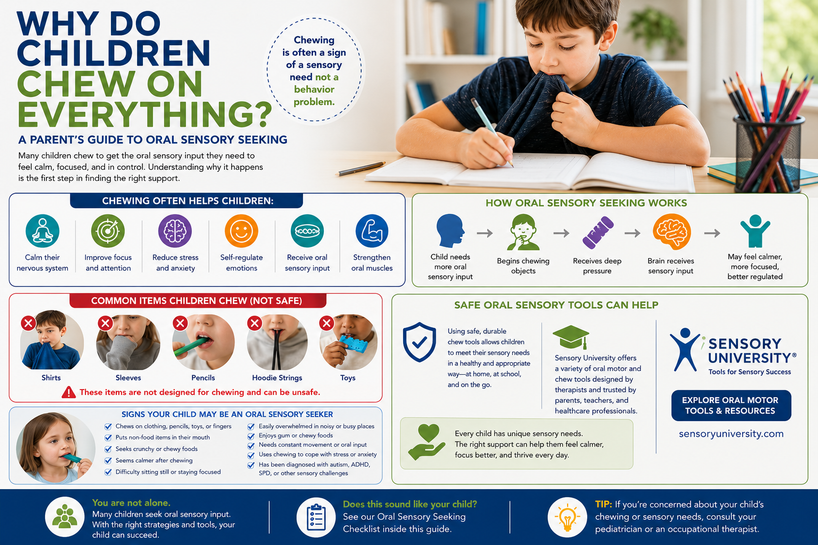
Why Do Children Chew on Everything? A Parent's Guide to Oral Sensory Seeking
If your child constantly chews on shirts, sleeves, pencils, toys, blankets, hoodie strings, or even their own fingers, you're not alone. This is one of the most common concerns parents bring to occupational therapists and pediatric specialists. While persistent chewing can be frustrating and sometimes embarrassing, it is often much more than a simple habit or behavior problem.
For many children, chewing serves an important purpose. It can help them calm down, stay focused, reduce anxiety, organize sensory information, or satisfy an oral sensory need. Understanding why your child chews is the first step toward helping them safely and effectively.
At Sensory University, we have spent more than three decades working alongside occupational therapists, speech-language pathologists, teachers, healthcare professionals, and families to develop sensory products that improve the lives of children with autism, ADHD, sensory processing challenges, developmental delays, and oral motor needs. One of the most common questions we hear is:
"Why does my child chew on everything?"
The answer is different for every child, but in many cases, chewing is a healthy attempt to meet an underlying sensory need rather than simply misbehaving.
Why Do Children Chew?
Chewing is a completely normal part of early childhood development. Babies and toddlers naturally explore the world through their mouths as they learn about different textures, temperatures, and objects. During teething, chewing also provides relief from sore gums.
As children grow older, most naturally outgrow this stage. However, some children continue chewing well beyond the toddler years. Instead of viewing this as a bad habit, many therapists recognize that chewing often serves an important purpose.
Children may chew because it helps them:
- Calm their nervous system
- Improve concentration
- Stay alert during school
- Reduce anxiety
- Organize sensory information
- Strengthen oral muscles
- Self-regulate during stressful situations
Many children aren't even aware they're chewing until someone points it out.
What Is Oral Sensory Seeking?
The mouth is one of the body's most sensitive sensory systems. It contains thousands of nerve endings that constantly send information to the brain about pressure, texture, movement, and temperature.
Some children naturally crave more sensory input than others. This is commonly referred to as oral sensory seeking.
Children who seek oral sensory input often chew on:
- Shirt collars
- Sleeves
- Hoodie strings
- Pencil erasers
- Pen caps
- Toys
- Blankets
- Jewelry
- Fingers
- Backpack straps
Chewing provides deep pressure to the jaw muscles, which many children find calming and organizing. This input can help improve attention, regulate emotions, and reduce feelings of stress or sensory overload.
Is It Normal for Children to Chew?
Yes—especially during infancy and toddlerhood.
However, if chewing continues into preschool, elementary school, or beyond, it may indicate that your child has a greater need for oral sensory input.
Persistent chewing does not automatically mean your child has autism or another diagnosis. Many children without developmental disorders continue to chew because it helps them regulate their nervous system.
Every child develops differently, and chewing should always be considered alongside the child's overall development, communication skills, and behavior.
Conditions Commonly Associated with Oral Sensory Seeking
Although oral sensory seeking can occur in any child, it is more commonly observed in children with:
- Autism Spectrum Disorder (ASD)
- Attention-Deficit/Hyperactivity Disorder (ADHD)
- Sensory Processing Disorder (SPD)
- Developmental delays
- Speech and language disorders
- Oral motor weakness
- Anxiety
It is important to remember that chewing alone is not enough to diagnose any condition. If you have concerns about your child's development, consult your pediatrician or a qualified occupational therapist for a comprehensive evaluation.
Why Do Children Chew on Their Shirts?
Chewing on shirt collars and sleeves is one of the most common forms of oral sensory seeking.
Children often choose clothing because it is always available and provides consistent resistance while chewing. Unfortunately, this can quickly lead to damaged clothing, embarrassment at school, and concerns about hygiene.
Rather than continually asking children to stop chewing, many occupational therapists recommend identifying the reason behind the behavior and redirecting it to a safer alternative when appropriate.
Why Do Children Chew on Pencils and Toys?
Pencils, pen caps, toys, and other classroom objects are commonly chewed because they are readily available and provide the jaw with resistance.
Unfortunately, many everyday objects are not designed for chewing. They can break, splinter, or contain materials not intended for repeated oral use.
Providing children with products specifically designed for oral sensory input may help reduce chewing on unsafe objects while still allowing them to meet their sensory needs.
When Should Parents Be Concerned?
Occasional chewing is usually nothing to worry about.
However, it may be beneficial to speak with your pediatrician or occupational therapist if your child:
- Continues chewing well beyond toddlerhood.
- Frequently destroys clothing.
- Chews unsafe objects.
- Injures their teeth or gums.
- Becomes upset when unable to chew.
- Has additional sensory, communication, or developmental concerns.
A professional evaluation can help determine whether chewing is related to sensory processing, oral motor development, anxiety, or another underlying factor.
How Occupational Therapy Can Help
Occupational therapists frequently work with children who have oral sensory needs.
Treatment may include:
- Oral motor activities
- Sensory integration strategies
- Heavy work activities
- Environmental modifications
- Self-regulation techniques
- Safe oral sensory tools when appropriate
Every child is unique, so therapy should always be individualized based on the child's specific needs and goals.
WHY CHILDREN CHEW
Sensory Seeking
│
├── Oral Input
├── Self-Regulation
└── Focus
Anxiety
│
├── Stress Relief
└── Comfort
Oral Motor Development
│
├── Jaw Strength
└── Muscle Development
Medical / Developmental
│
├── Autism
├── ADHD
├── SPD
└── Other Conditions
Choosing a Safe Chew Tool
If your child benefits from oral sensory input, choosing the right chew tool is important.
Look for products that are:
- Designed specifically for oral use
- Durable enough for your child's chewing strength
- Easy to clean
- Made from high-quality, food-contact materials
- Appropriate for your child's age and developmental needs
Children vary greatly in how they chew. Some prefer softer textures, while others require firmer products that provide stronger resistance.
Oral Sensory Solutions from Sensory University
For more than 30 years, Sensory University has worked with therapists and families to develop oral motor tools designed to meet a wide range of sensory needs.
Our Chew Stixx® line includes multiple shapes, textures, and resistance levels to accommodate different chewing preferences. We also offer oral motor tools, pencil toppers, and therapist-recommended products designed to support children who benefit from safe oral sensory input.
Choosing the right product depends on your child's age, chewing strength, sensory preferences, and individual goals.
Frequently Asked Questions
Is chewing a sign of autism?
No. While many children with autism seek oral sensory input, chewing alone does not indicate autism. Many children without autism also chew for sensory or developmental reasons.
Can chewing help children focus?
Some children report that chewing helps them stay calm and attentive during learning activities. Individual responses vary.
Should I stop my child from chewing?
Rather than simply trying to eliminate chewing, many therapists recommend understanding why the child is chewing and providing safe alternatives when appropriate.
Will my child outgrow chewing?
Some children naturally outgrow oral sensory seeking, while others continue to benefit from oral sensory strategies as they grow older.
Helping Your Child Thrive
Chewing is often your child's way of meeting an important sensory need. By understanding the reasons behind the behavior and providing appropriate support, parents can help children regulate emotions, improve focus, and safely satisfy their oral sensory needs.
If you're unsure which oral sensory products are right for your child, the team at Sensory University is here to help.