
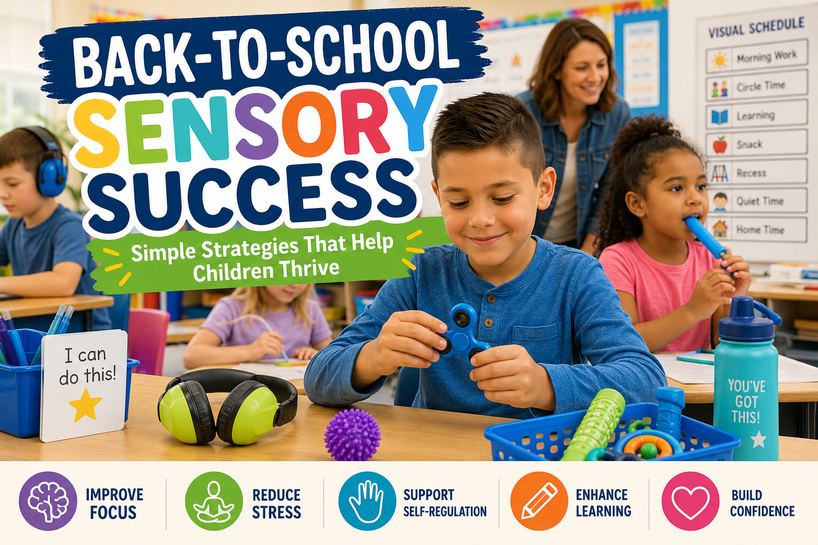
As a new school year approaches, many families are busy buying backpacks, pencils, and notebooks. But for children with autism, ADHD, sensory processing differences, anxiety, or developmental delays, preparing for school often involves much more than school supplies.
The right sensory supports can make the difference between a stressful school day and a successful one.
Why Back-to-School Can Be Challenging
Returning to school means new classrooms, unfamiliar teachers, changing routines, noisy hallways, bright lights, and increased expectations. For children with sensory needs, these changes can quickly become overwhelming.
Common challenges include:
- Difficulty sitting still during lessons
- Trouble focusing in busy classrooms
- Anxiety during transitions
- Sensitivity to noise, clothing, or lighting
- Chewing on pencils, shirts, or fingers
- Trouble calming after recess or lunch
These behaviors are often a child's way of regulating their nervous system—not signs of poor behavior.
Small Supports Can Make a Big Difference
Many occupational therapists recommend providing sensory input throughout the day rather than waiting until a child becomes overwhelmed.
Helpful classroom supports may include:
- Quiet fidget tools for improving attention
- Oral motor chew tools for children who need safe chewing alternatives
- Weighted lap pads or calming products during seated activities
- Fine motor activities that strengthen hand muscles for writing
- Sensory breaks between learning tasks
- Visual schedules to reduce anxiety during transitions
The goal isn't to eliminate movement—it's to provide appropriate movement that helps children stay engaged.
Build a Sensory Toolkit
Every child is different, but a simple sensory toolkit can help throughout the school day.
Consider including:
- A classroom-friendly fidget
- A chew tool if oral sensory seeking is present
- Noise-reducing headphones for loud environments
- A visual schedule or communication supports
- A calming sensory item for breaks
Working together, parents, teachers, and therapists can identify which supports help each child perform at their best.
Partner With Teachers
Many teachers welcome sensory tools when they understand how they help learning.
Share what works at home, explain your child's sensory preferences, and provide tools that are quiet, safe, and appropriate for the classroom.
Open communication creates consistency and helps children feel more confident from the first day of school.
Supporting Success Every Day
At Sensory University®, we believe every child deserves the opportunity to learn in an environment that supports how their brain and body work best.
Whether you're a parent preparing for the first day of kindergarten, a teacher setting up your classroom, or a therapist helping students succeed, the right sensory tools can reduce stress, improve focus, and build confidence.
Explore Sensory University's complete collection of therapist-recommended sensory products, including chew tools, classroom-friendly fidgets, fine motor activities, calming products, games, and therapy resources designed to help children thrive both at school and at home.